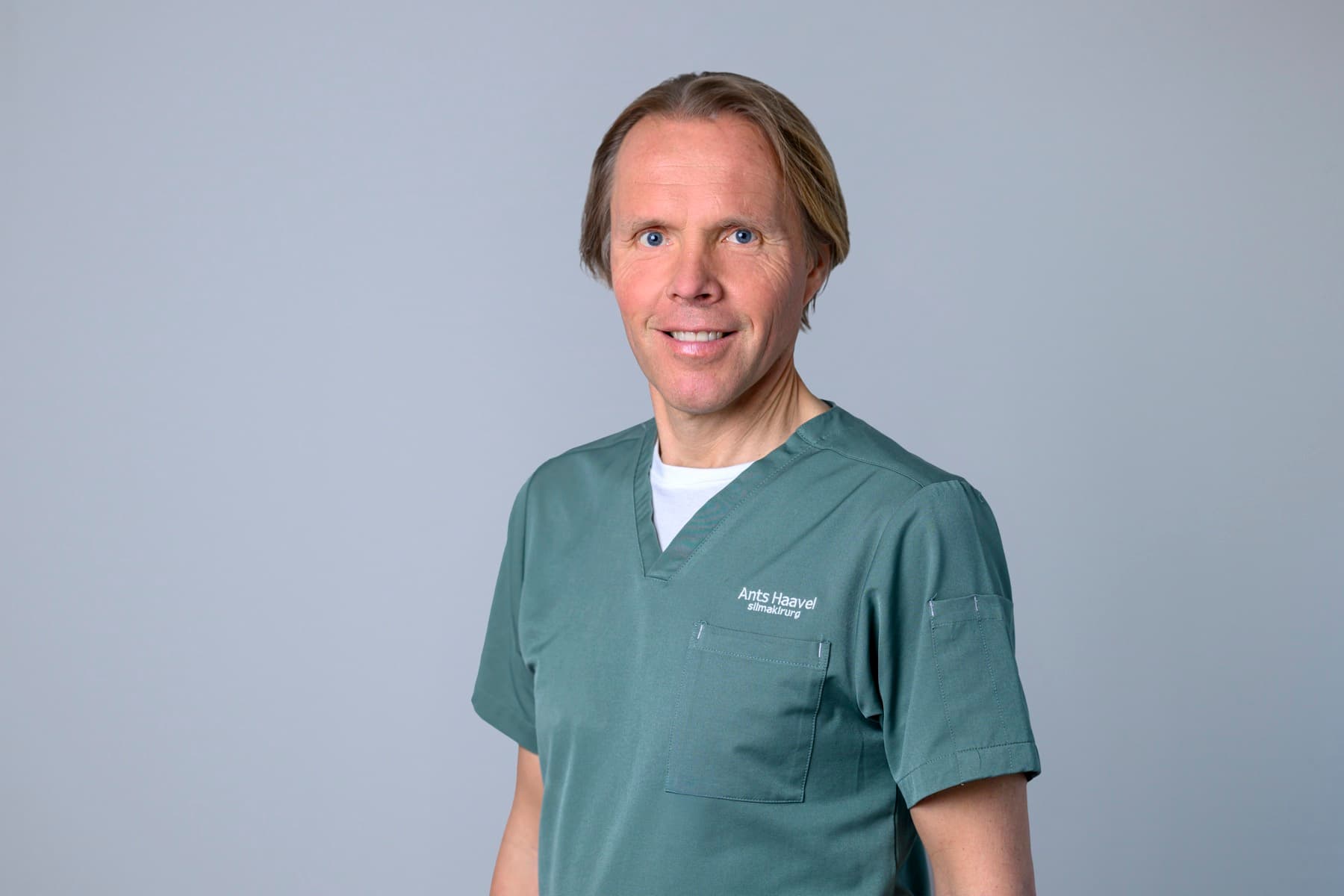
KSA Silmakeskus specialises in the Flow3 method and considers it the most tissue-sparing choice for patients whose eye anatomy is suitable. At the same time, Flow3 is not for everyone — in some cases intraocular lenses (ICL), lens replacement (RLE), or simply continuing with glasses or contact lenses may be the more sensible option.
IntroductionWhy I wrote this guide
In 21 years of practice I have seen thousands of patients who arrive at the clinic with high expectations and many questions, but who leave the examination saying: "I need to take all of this in and think about it." This is not because we explain things poorly. Refractive surgery is simply an unusually multi-layered field, and the volume of information a patient receives during a one-hour examination is too much.
New and complex terms — Flow, SMILE, Femto-LASIK, corneal biomechanics, lens replacement, ectasia — can be disorienting at first. How do you make a decision this important, one that can change your quality of life, when you don't fully understand what will actually happen to your eyes?
Over time I realised that Estonia is missing a guide to laser vision correction written for the patient: technically accurate, but understandable to someone without a medical background.
21 years, more than 55,000 surface procedures, and not a single registered case of corneal ectasia.
The aim of this guide is not to persuade you to have surgery, but to help you understand the decision before you make it.
What you'll find in the guide
The full version (~25 minutes of reading) is in five parts and contains 20 questions you can use to evaluate the competence of any clinic.
The full guide continues from the link we email you ↓